Queue Management System in Saudi Arabia Meets Unified VoIP
In 2026, the smartest Saudi branches are connecting their queue management system in saudi arabia directly to their phone infrastructure. The result is a single service layer where a visitor who takes a ticket, a caller on hold and a customer waiting for a callback are all handled by one coordinated platform. This article explains why merging queuing with voice-over-IP telephony is becoming the default design for banks, clinics and telecom retailers across the Kingdom.
Most organisations still run these two systems in isolation. The lobby has a queue platform; the back office has a separate phone system. Joining them unlocks faster service, cleaner data and a noticeably better customer experience.
Why Pair a Queue Management System in Saudi Arabia With VoIP
Waiting is waiting, whether a customer stands in a branch or sits on a call. When your queuing and telephony platforms share one database, you can balance both channels against the same pool of agents and counters.
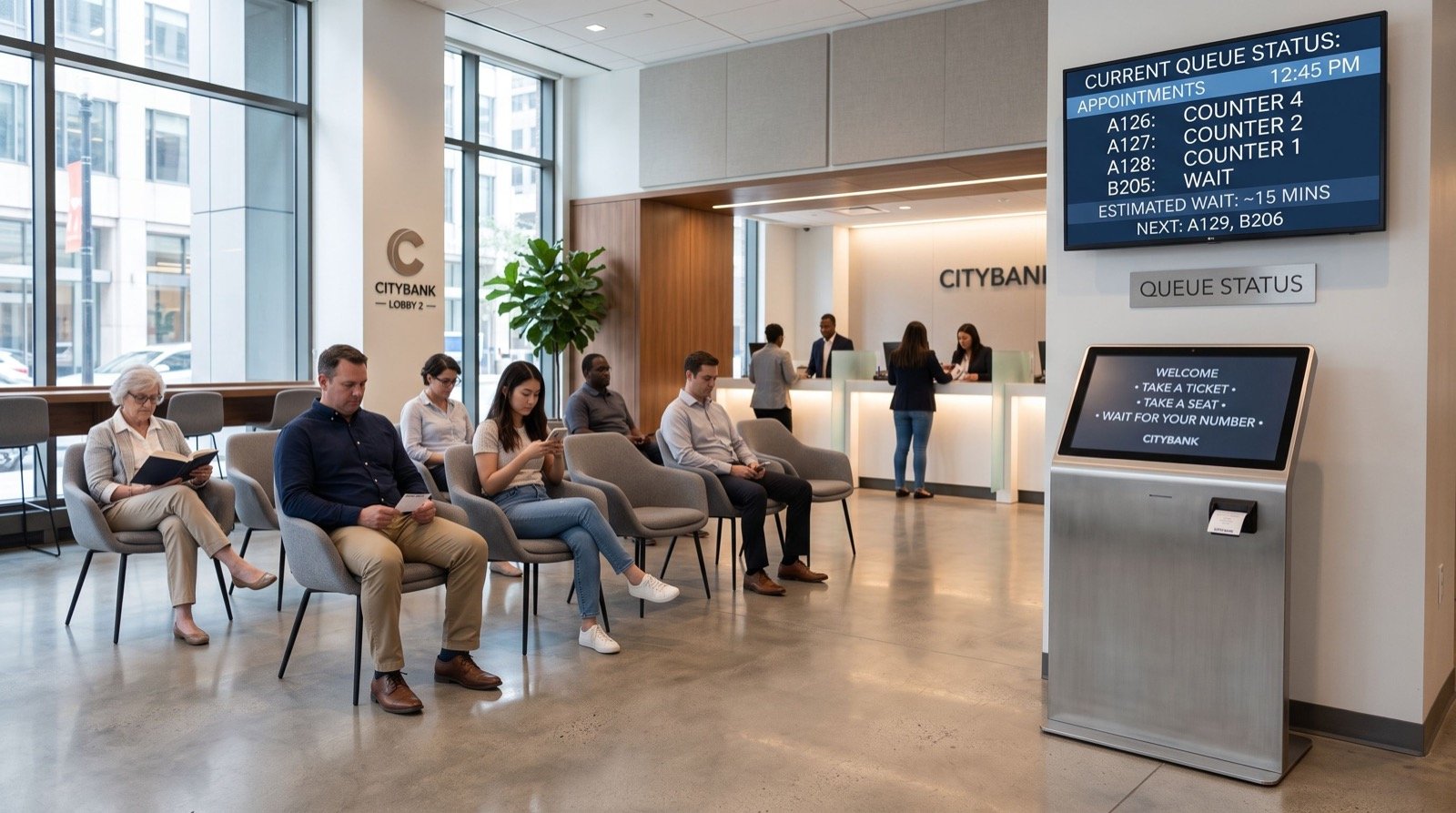
Consider a Riyadh bank branch. During the midday rush, the lobby fills while the phone lines ring unanswered. A unified system lets a supervisor see both queues on one dashboard and shift a free teller to inbound calls, or offer waiting lobby visitors a callback instead of a seat. That flexibility is impossible when the systems are separate.
The Business Case in Three Points
- One view of demand: walk-in and phone volume appear on a single screen.
- Smarter routing: agents move between channels based on live load.
- Unified reporting: service-level data covers every touchpoint, not just the lobby.
The Role of IP Telephony Hardware
A unified platform is only as reliable as the handset on the counter. Enterprise-grade desk phones deliver HD voice, programmable keys for queue functions and power-over-Ethernet simplicity. Deploying Fanvil IP Phones in Saudi Arabia gives branches rugged, SIP-standard handsets that integrate cleanly with modern queue and contact-centre software, which is why they are a common choice for Gulf rollouts.
Look for handsets that support:
- SIP and open standards for vendor-neutral integration.
- Programmable keys mapped to queue pickup, transfer and callback.
- Dual Gigabit ports and PoE to simplify counter cabling.
- Arabic on-screen menus for front-line staff.
Why Open Standards Matter
SIP is the global standard that lets phones, PBXs and queue software from different vendors work together. The protocol is defined by the Internet Engineering Task Force, and sticking to it protects you from lock-in and keeps future upgrades affordable.
Designing the Integrated Branch
A joined-up branch follows a clear signal path from arrival to resolution. The table maps each customer action to the system that handles it.
| Customer action | Queue system role | VoIP system role |
|---|---|---|
| Takes a ticket or books an appointment | Issues position, estimates wait | Offers callback option by SMS |
| Waits in lobby | Shows turn on signage | Routes overflow to phone agents |
| Reaches the counter | Logs service time | Enables warm transfer to specialist |
| Needs follow-up | Schedules return visit | Places outbound callback |
Implementation Steps That Work
A unified rollout succeeds when you treat it as one project, not two. Follow a structured sequence.
- Audit both systems: document current queue hardware and phone lines before planning.
- Choose an integration layer: pick queue software with open APIs and SIP-compatible phones.
- Pilot one branch: prove the combined dashboard with real traffic.
- Train cross-channel staff: teach tellers to handle both walk-ins and calls.
- Scale with central reporting: connect every branch to one analytics hub.
Because this blends networking, telephony and customer-experience design, it pays to engage reliable local experts who can plan the integration, configure the SIP trunks and support the branches after go-live.
How Much Downtime Should You Expect?
With proper staging, the cutover for a single branch happens outside business hours and customers notice nothing. Keeping the old handsets live until the new platform is verified gives you a clean fallback. Multi-branch programmes simply repeat the tested process site by site.
Measuring Success After Go-Live
Track combined metrics rather than channel silos. The numbers that matter most are:
- Total resolution time across lobby and phone.
- Agent utilisation blended over both channels.
- Callback acceptance rate from lobby visitors.
- First-contact resolution for phone enquiries.
Branches that watch these figures weekly spot bottlenecks early and keep both queues short, which is the real payoff of unifying your queue management system in Saudi Arabia with modern VoIP.
Real-World Scenarios Where Unification Wins
Abstract benefits land better with concrete examples. Here is how a joined-up platform changes everyday moments in a Saudi branch.
- The lunchtime surge: the lobby fills and phones ring at once. One supervisor shifts an idle counter agent to answer calls, then back to the floor when the rush passes.
- The VIP customer: a priority client books an appointment, and the system both reserves a counter and routes any inbound call from that customer straight to their relationship manager.
- The follow-up: a visitor who could not be served books an automatic callback instead of waiting, freeing a lobby seat and smoothing demand.
- The outage: because handsets use open SIP standards, a failed PBX can fail over to a backup without replacing hardware.
Each scenario removes friction that a siloed setup simply cannot address, and each one protects revenue that would otherwise walk out the door.
Planning for Growth and Remote Work
Unified platforms also scale beyond the branch. Because the phone layer is software-defined, agents can log in from a head-office contact centre or a home office during disruptions, yet still appear in the same queue as on-site staff. That flexibility proved its worth during recent years of hybrid working, and in 2026 it lets Saudi organisations pool scarce specialist staff across many branches instead of stranding expertise in one location. Build your design with that elasticity in mind from the start.
Frequently Asked Questions
Can any queue management system connect to VoIP phones?
Only platforms with open APIs and SIP support integrate cleanly. Proprietary or closed systems may require costly custom bridges, so confirm standards support before buying.
Do I need to replace all my phones to unify the systems?
Not always, but SIP-standard handsets such as enterprise Fanvil models make integration far simpler and future-proof your branch. Older analogue phones usually need adapters or replacement.
Is a unified platform suitable for small branches?
Yes. Even a two-counter branch benefits, because one supervisor can balance walk-ins and calls instead of juggling two disconnected screens.
How does unification improve customer experience?
Customers get consistent service whether they visit or call, shorter waits through smarter routing, and the option of a callback instead of standing in line.
Conclusion
Merging your queue management system in Saudi Arabia with standards-based VoIP telephony creates one coordinated service layer for every customer, in person or on the phone. Choose open-standard software, deploy reliable SIP handsets, pilot before you scale and lean on experienced local partners. In 2026, that unified approach is how Saudi branches turn waiting into a competitive advantage.