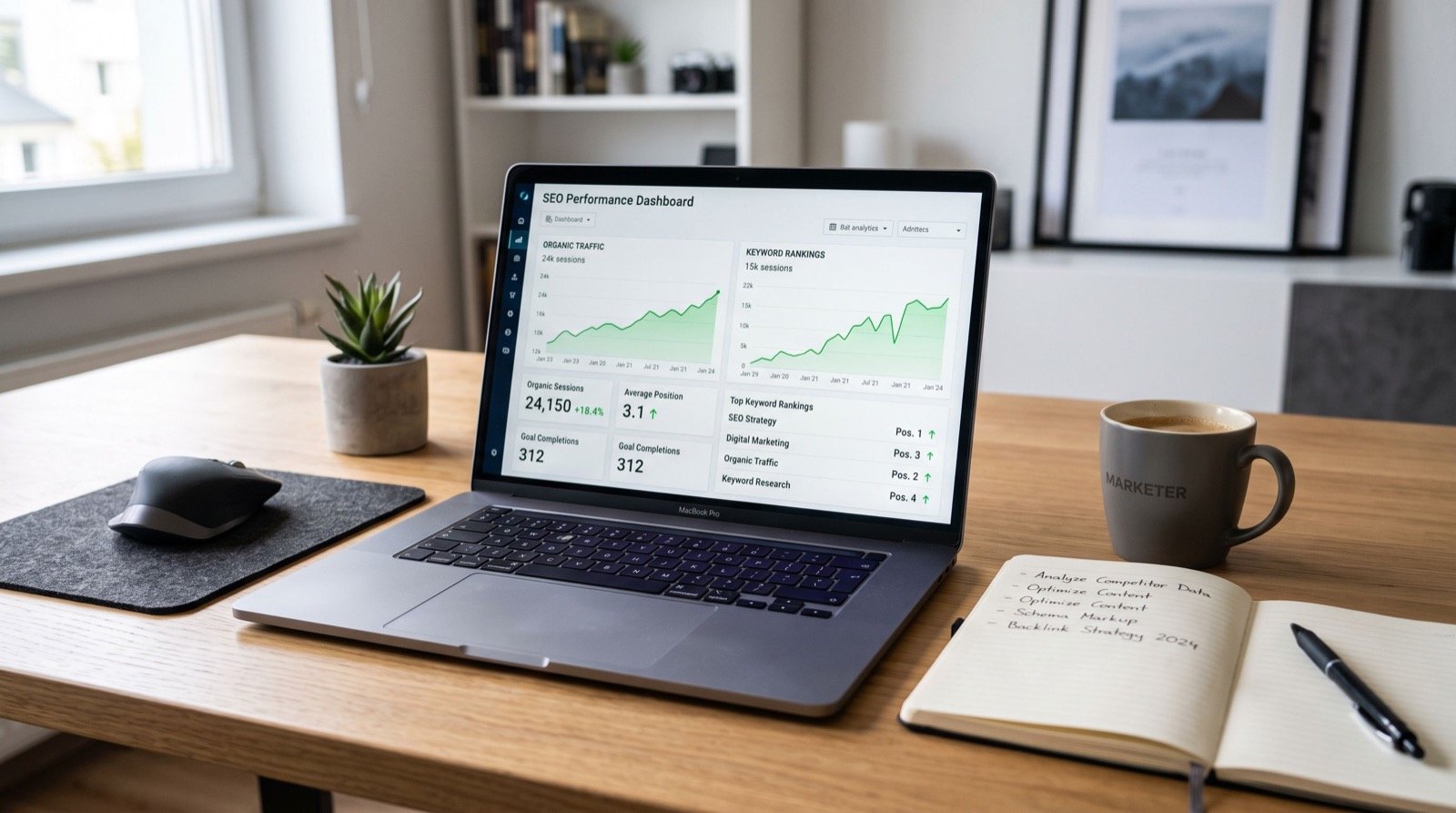

PPC Advertising: A Practical Playbook for Profitable Paid Campaigns in 2026
Few channels deliver faster results than PPC advertising, which is exactly why it is so easy to waste money on. Pay-per-click can flood your business with qualified leads within hours, or quietly drain your budget on clicks that never convert. The deciding factor is strategy. This 2026 playbook shows you how to structure campaigns, write ads that earn the click, and manage spend so every rupee works as hard as possible.
Whether you sell products online or generate service leads, the principles below turn paid traffic from a gamble into a predictable growth lever.
Why PPC advertising rewards precision
Unlike organic channels that build slowly, PPC buys immediate visibility at the top of results. That speed is powerful but unforgiving: a sloppy setup spends money instantly on the wrong audience. Precision in targeting, keywords and landing pages is what separates profit from waste.
The platforms reward relevance too. Google’s Quality Score, for example, lowers your cost per click when your ads and pages closely match searcher intent, so tight relevance literally pays.
Understanding the auction
Your ad position is not bought by bid alone. As Google’s Ads Help documentation explains, Ad Rank combines your bid with ad quality and expected impact, meaning a well-built campaign can outrank deeper-pocketed competitors while paying less per click.
Structuring campaigns for control
A messy account is an expensive account. Organise it so you can see exactly what works and shift budget accordingly.
- Tight ad groups: a handful of closely related keywords each.
- Match-type discipline: use exact and phrase match to control waste.
- Negative keywords: block irrelevant searches aggressively.
- Dedicated landing pages: one page per offer, matched to the ad.
- Clear conversion tracking: so every rupee is accountable.
Negative keywords alone can cut wasted spend dramatically. Review your search-term report weekly and keep pruning queries that cost money without producing sales.
Comparing major PPC platforms in 2026
Each platform suits different goals and buyer mindsets. Choose based on where your customers decide, not where everyone else advertises.
| Platform | Buyer intent | Best for | Typical cost |
|---|---|---|---|
| Google Search | Very high | Direct lead and sales capture | Medium–high |
| Meta (FB/IG) | Discovery | Visual products, retargeting | Low–medium |
| YouTube | Awareness | Brand and demand building | Low |
| Google Shopping | High | Ecommerce product sales | Medium |
A common winning mix is Google Search to capture existing demand plus Meta retargeting to recover visitors who did not convert the first time. The two reinforce each other.
Writing ads that earn the click
Your ad copy is a tiny salesperson. Make it specific, benefit-led and honest, with a clear call to action.
- Lead with the outcome the customer wants, not your features.
- Include a number, offer or proof point to stand out.
- Match the headline to the exact search query where possible.
- End with a direct instruction: call, shop or book now.
- Use ad extensions to occupy more space and add links.
Then make sure the landing page delivers what the ad promised. A mismatch between ad and page is the fastest way to pay for clicks that bounce.
How much should you spend on PPC?
Start small and let data set the pace. Begin with a budget you can afford to treat as learning for the first few weeks, measure cost per conversion, and only scale once a campaign proves profitable.
Resist the urge to spread a tiny budget across five platforms. Concentrate spend where intent is highest, prove it works, then expand. Businesses in the twin cities often bring in a Digital Marketing Agency in Rawalpindi to manage bids and testing so the learning phase is shorter and cheaper.
The retargeting multiplier
Most first-time visitors do not buy. Retargeting them with tailored ads often converts at a fraction of the cost of cold traffic, making it one of the highest-return tactics in any PPC plan. Set it up early rather than as an afterthought.
Managing and scaling profitably
PPC is never set-and-forget. Review performance weekly, pause losers, and reinvest in winners. A capable Digital Marketing Agency continuously tests headlines, audiences and bids to compound gains over time. For businesses that prefer hands-on support, reliable local experts can keep accounts healthy while you focus on fulfilment.
Common PPC mistakes that drain budgets
Even experienced advertisers leak money in predictable ways. Knowing the traps lets you sidestep them before they cost you.
The first is sending all traffic to a homepage instead of a dedicated landing page. A homepage asks visitors to figure out what to do next; a focused page guides them straight to the action. The second is ignoring mobile, where most clicks now happen — a form that is painful to complete on a phone wastes every rupee that brought the visitor there.
A third trap is set-and-forget bidding. Markets shift, competitors enter, and seasonal demand swings, so bids left untouched for months quietly overpay. Finally, many advertisers never test more than one ad, denying themselves the quick wins that come from comparing headlines and offers against each other.
Test, learn, and compound
Always run at least two ad variations per group and let data pick the winner. Then test the winner against a fresh challenger. This simple, continuous cycle of small experiments compounds into dramatically lower costs and higher conversion rates over a few months, turning a modest account into a reliable profit engine.
Frequently Asked Questions
How quickly does PPC advertising produce results?
Almost immediately. Campaigns can drive traffic and leads within hours of going live, though it takes a few weeks of data before you can optimise for consistent profitability.
Is PPC better than SEO?
They serve different roles. PPC buys instant visibility while SEO builds durable, lower-cost traffic over time. The strongest strategies run both so you capture demand now and reduce acquisition costs later.
Why are my clicks not converting?
Usually the landing page is the culprit — a slow, unclear or mismatched page. Align the page tightly with the ad promise, simplify the action, and conversions typically improve fast.
What budget do I need to start?
You can begin with a modest daily budget focused on a single high-intent campaign. The key is treating early spend as learning, then scaling only what proves profitable.
Conclusion
Profitable PPC advertising in 2026 comes down to precision: tight campaign structure, relentless negative keywords, ads that match intent, and landing pages that deliver. Start small, retarget early, review weekly, and scale only proven winners. Managed well, paid advertising becomes the most controllable growth lever you own. Ready to make every click count? Audit your campaigns this week or bring in a specialist to turn paid traffic into predictable profit.